Showing posts with label Solar Industry. Show all posts

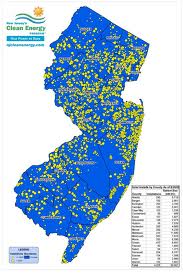
New Jersey Installs More Than 10,000 Solar Projects

New Jersey announced last month that it had reached a solar-energy milestone - more than 10,000 solar installations statewide.

But now some worry that the state's solar industry, second behind only California's in the United States, is being hurt by its own success.

That's because an oversupply of solar renewable-energy certificates, a major means of financing solar projects, has led to a dramatic drop in their price in the spot market.

Solar customers earn a certificate every time their system generates 1,000 kilowatt-hours of electricity. Power suppliers are required to buy a certain amount of the credits, known as SRECs, to meet New Jersey's renewable-energy standards.


"If the price of the [certificates] drops, then the time period I get my money back to break even is longer," said Gene Mulligan.

The Wildwood Crest resident received federal and state incentives to install a $30,000 solar system on his condominium last year. But he had also counted on paying off the system by selling solar certificates, which were selling for more than $600 on the Flett Exchange, an online trading exchange, when his system started generating power.

The price in New Jersey has fallen below $300 on such exchanges during the last six months.

Pennsylvania's solar market, fueled by the state's generous rebate program, has also led to an oversupply of SRECs and a dramatic drop in prices, analysts say.

In New Jersey, "we've done such a good job at stimulating solar that the market is now crashing," said State Sen. Bob Smith (D., Middlesex), chairman of the Senate Environment and Energy Committee.

Smith is the sponsor of legislation that would accelerate by one year state requirements for how much renewable energy must be produced, forcing power companies to buy more SRECs. The bill passed the Senate in late June and awaits action in the Assembly.

In the first three months of 2011, New Jersey installed 49 percent more megawatts of solar capacity than it did in the same period last year, the Board of Public Utilities said.

It reported that 520 solar projects totaling more than 40 megawatts had been installed in June - a record number of projects and solar capacity for one month.

Nearly 5,000 more approved projects are in the pipeline, the BPU said.

But industry observers project that in the next year or two, at least, the market will slow down.

SOURCE: http://articles.philly.com/2011-08-22/news/29914841_1_solar-projects-solar-industry-solar-customers  

Denver Airport Leads US Airports for Solar Power

Denver International Airport (DIA) now has more solar power than any other commercial airport in the United States.

Renewable Energy World reports that DIA has just completed a 4.4-megawatt ground-mounted solar power system, increasing its total solar power capacity to more than 8-MW. In total, the DIA solar installations cover 45 acres of farmland near the airport.

Put into an operational perspective, DIA now receives over 6 percent of its electricity from solar-generated power. This is positive news from both green and economic standpoints.

“We support alternative energy applications at DIA because these projects are good for the environment while positively impacting our bottom line; they are financially sustainable,” said Kim Day, the DIA aviation manager in a press release. “This airport was built with a goal of being green.”

DIA has signed a 20-year power purchase agreement with a utility, Constellation Energy, to buy the electricity produced.

Baltimore-based Constellation Energy owns and maintains the solar PV system for this project. The company is a publicly traded (NYSE: CEG) Fortune 500 leader with nearly 10,000 employees. It has approximately 12,000 megawatts of generation capacity and reported 2010 revenue of $14.3 billion.

DIA’s solar generating capacity is estimated at 7,000 megawatt-hours annually from 19,000 Yingli solar photovoltaic panels.

This is the third solar project for the DIA. The first two installations were for 2-MW and 1.4-MW, respectively.

SOURCE: http://cleantechnica.com/2011/08/10/denver-international-airport-leads-us-commercial-airports-in-solar-power/

Solar Energy Training in Portland

Nationally recognized solar training company ONTILITY and Graybar Electric Co. will offer Entry Level Solar Electric Training on September 19-23, at Graybar in Portland, OR. The solar energy market in Oregon continues to grow rapidly and the demand for well trained installers is high.

“A well-trained workforce insures that solar installations will be done safely and that those systems will perform the way they are supposed to.”

ONTILITY presents our Professional Solar Training course for the purpose of preparing workers and businessmen to enter into the Solar Energy Workforce. Attending this award winning IREC Accredited Entry Level Solar Electric Training Class is the first step to becoming a member of the Solar Energy Industry. This class teaches the NABCEP Entry Level Learning Objectives and will get you started on a path that will lead you to a future in this exciting and fast growing industry.

During this five day class attendees will be taught valuable industry knowledge that is needed to join the Solar Industry as a:
  • Solar Business Owner

  • Solar PV Installer

  • Solar PV Project Manager

  • Solar Salesperson

  • Solar PV System Designer


This class is suitable for anyone interested in solar energy - entrepreneurs, electricians and electrical, mechanical and general contractors and all others in the building trades who are interested in business opportunities in the Solar Energy Industry.

At a time when the U.S. economy overall is growing at an annual rate of around 2% and job creation continues to lag, the Solar Industry is growing by more than 50% per year and is expected to create 24,000 new jobs in 2011. A 2010 survey showed that more than 80% of property owners are interested in and plan to install solar energy systems on their property within the next five years. Legislative action by the State of Oregon, Federal solar incentive and programs sponsored by electric utility companies are having a dramatic effect on the growth of the state’s solar market.

The rapid growth of the solar market demands a well-trained workforce and is a key element in the growth and long-term success of solar markets. According to ONTILITY Director of Education, Ken Whiteside. “A well-trained workforce insures that solar installations will be done safely and that those systems will perform the way they are supposed to.” Mr. Whiteside continued, “A comprehensive introductory solar energy course which includes system design and installation topics is a great way for anyone to get started in solar.” The upcoming 40 hour ONTILITY class consists of five days of training, 8 a.m. – 5 p.m. each day. Those who complete the course are eligible to sit for the NABCEP PV Entry Level Exam. The 40 credits earned by completing the class also satisfy the education requirement for NABCEP PV Installer certification.
  
SOURCE:  http://eon.businesswire.com/news/eon/20110810005925/en/solar-training/graybar/ontility 

Japan's Complicated Solar Plans

The anticipated passage of legislation to introduce feed-in tariffs in Japan, or the guaranteed rates at which public utilities must buy electricity produced by the sun, wind and other renewable energy sources, is raising expectations that large-scale solar power generation will grow rapidly.

But three issues – higher costs, tight land regulations and the difficulties of cooperating with electric power companies – will likely create huge business obstacles to the development of massive solar power plants. Still, companies are now positioning themselves to cash in on a potential solar bonanza.

Power projects

West Holdings Corp., a renewable energy company listed on the Jasdaq market, has launched a new project to build a large solar farm with a capacity of 1.5 megawatts in Toho, Fukuoka Prefecture. Next summer, Kyushu Electric Power Co. will start buying all power generated at the facility, which will be built on a 12,000-sq.-meter plot of land in a former coal-mining area.

West Holdings, which imports solar cells from China and installs solar power systems for households, plans to build 10 large solar farms across the nation within three years. “When the feed-in tariff scheme kicks in, solar farms will generate far bigger profits than installations of household solar systems,” said Naoto Ikeda, a senior executive at West Holdings. “We cannot afford to miss out on this opportunity.”

There are still only several large-scale solar farms in Japan, as the growth of the business has been slowed by the relative inefficiency of power generation. This makes it difficult to secure sufficient returns on the massive initial investment that is required.

But the new system, which will require utilities to buy all power produced at the solar farms at fixed prices, will boost the profitability of these projects. This is why companies in other business fields are starting to break into the solar business, including Softbank Corp. and Tokio Marine Asset Management Co., which is teaming up with Mitsui & Co.

Some analysts, however, are not so bullish about the prospects for the solar business. They point to the high costs of solar panels as a big barrier to profitability. Even if mass purchases drive down solar panel prices, a 1-megawatt solar plant will still cost at least 400 million yen to build, an official at a trading house said.

The prices and time frames for mandatory power purchases by utilities under the new system have yet to be determined. The most plausible terms are 40 yen per kilowatt-hour for 15 years, or 2 yen lower than the current price at which utilities buy surplus electricity. A 1-megawatt solar farm would generate some 600 million yen over such a time frame under these conditions, for mediocre investment returns of about 2 – 3%. And the returns end up looking even lower if land leases, tax payments and other costs are factored in.

Spanish success

In 2007, Spain established feed-in tariffs at about 10 times higher than the market prices for electricity, over a mandatory purchasing period of 25 years. These terms raised the returns on solar power investment to 15 – 20%, touching off a solar investment boom in the country. As a result, total solar power generation in Spain soared more than 20 times in 2008 from 2006.

However, the basic terms for feed-in tariffs in Japan are considerably less attractive than they are in other countries. Softbank President Masayoshi Son has ruled out massive capital investment in renewable energy, saying he will mainly use bank lending to finance his solar projects.

Another potential drag on the outlook for solar power is the factory location law, which bans power generation facilities from occupying more than half of the land on a power plant site. A provision allowing utilities to restrict the connection of solar power plants to the power grid, in order to secure stable power supplies, is also dimming prospects for the solar power business.

These hurdles must be overcome to promote large-scale solar power generation. The soon-to-be-enacted law to introduce a feed-in tariff scheme is clearly little more than an initial step in these efforts.

SOURCE:  http://www.asiacleantechgateway.com/2011/08/costs-land-rules-utilities-complicate-solar-plans/  

The Downside to Solar

Is it possible that solar energy — clean, renewable, virtually infinite — could have a downside? As it's being pursued on our public lands, yes.

In the name of greening America, the Obama administration is about to open up as much as 21.5 million acres of mostly undisturbed, fragile desert land for potential industrial-scale solar energy development. That means huge swaths of public land in the West could be developed, degraded and effectively privatized.


But such degradation isn't necessary. We can have solar energy while keeping the desert wild and public lands truly public. The government could pursue the more efficient and far less damaging tactic of deploying solar panels across vast acreages of rooftops and parking lots.


Given the dizzying pace of permitting, industrial scale projects are pushed through with little meaningful public review or environmental impact analysis. Each has an average footprint of 4,300 acres; when they're completed, conversion of the sites — from desert habitat and multiple-use land to single-use industrial zones — will be total.


What's fueling the demand for land? Battling climate change and a dismal economy with green jobs, the Obama administration is offering generous subsidies for Big Solar development. These subsidies include cash grants of up to 30% of the cost of a project and loan guarantees in the billions, and they accrue to familiar corporate interests: oil companies, utilities and Wall Street firms.


When all of the effects are taken into account, it makes no sense to destroy the desert for large solar projects, and even less sense to turn over precious public land to corporate interests.

Read more at: http://www.latimes.com/news/opinion/commentary/la-oe-rosenberg-solar-20110518,0,1010788.story

Italy's Solar Future

On Thursday, Trina Solar(TSL) announced the opening of a sales office in Australia. It was a minor press release for the solar sector, yet on the day that Italy announced its solar incentive changes, a symbolic bit of news about the solar sector's future growth trajectory.

Several analysts were of the view that the final Italian policy changes were a disappointment when compared to leaks last week in the press suggesting greater concessions from the Italian government in the final days of debate. Yet there were incremental positives in Italy's new solar scheme. Solar stocks may have already priced in an Italian growth slowdown, too, or could simply be waiting on the upcoming earnings reports from many Chinese solar companies before pulling the trigger on the next solar trade.

Solar stocks held up well on the day that Italy made its solar policy changes public. There was no relief rally on the Italian market certainty on Thursday, as some had been predicting -- but, on the other hand, there was no big selloff on a day when equities were again trending down.

Notably, the Trina press release about Australia came just two days after industry bellwether First Solar(FSLR) highlighted Australia as a key market for geographic diversification. The Trina news and First Solar commentary are two more signs that even if all roads don't lead to Australia for solar modules, they won't continue to lead to Italy either.

"Italy is no longer a big growth market," concluded Wells Fargo analyst Sam Dubinsky. "There have been so many subsidy proposals in recent weeks/months, it's tough to tell whether this one is any better or worse vs. prior expectations. In addition, with the market screeching to a halt due to subsidy uncertainty, any renewed growth is somewhat of an incremental positive. However, it is clear to us that Italy's growth prospects are dampened and the market can no longer carry the industry," the Wells Fargo analyst said. He added that solar stock prices still need to reset.

"The sector is in the mid-innings of an inventory correction and pricing resets will likely continue into 3Q. While valuations for the group are low at 5-8X 2012E EPS and recent M&A (Total/SunPower) gives us hope multiples can expand at some point, investors will likely wait for earnings resets prior to bottom fishing a depressed peer group," the analyst wrote on Thursday.

The Italian government still has an overall target of 23 gigawatts of cumulative installations by the end of 2016, with an annual cap of EU6 billion to EU7 billion in solar subsidies through 2016.

The total spending cap for June through Dec. 2011 was lowered to EU300 million from EU447 million and for 2012 to EU280 million from EU373 million.

There were two central issues that had raised hopes headed into the final Italian policy changes: would the Italian government offer a grace period for ground-mounded projects through August, allowing for a mini-gold rush before the new reality set in and for all projects to receive the existing feed-in tariff rates? Secondly, would the Italian government up the capacity limit on small-scale projects to receive preferential treatment from 200 kilowatts to 1 megawatt?

The grace period for large-scale projects did not come to pass, and even if solar has the ability to install projects in the gigawatts in a matter of months, it won't be happening at the level of ground-mount projects in Italy before the end of the year.

Aaron Chew, analyst at Hapoalim Securities, wrote on Thursday, "Contrary to some initial hopes that the implementation of the new program may have been extended from May 31 to Aug. 31, ONLY the requirement for 'large' plants to register with the GSE has been pushed back. As such, previously-permitted projects under construction not only face the new lower FiT rates but are subject to the cap. In turn, while this may help save some older projects it does not imply incremental new project demand."

The good news is that Italy did increase the capacity on projects to not be put under its new solar spending cap from 200kw to 1 megawatt.

Rooftop projects of up to 1 MW will be excluded from the new subsidy spending cap between and June 2011 and Dec. 2012, which does leave "a wider loophole for project developers to skirt around the spending cap," the Hapoalim Securities analyst said.

There was a bit of negative news related to 200KW projects, though. The new solar policy in Italy allows for ground-mounted projects of up to 200KW to be built outside of the new annual spending cap in 2011 and 2012, however, only in cases where the projects are self-consuming all of the electricity generated. Analysts described this as an "effective" cap, at least at present, since there is not much of a market for self-consumed solar projects of this size that exists today.

All in all, Wells Fargo's Dubinsky saw rooftop market opportunity, even as the ground mount market opportunity waned. "There is no cap on rooftop projects up to 1MW, which is a small market today but will likely develop over time. There is also no cap on small projects up to 200KW, but energy must be self consumed for these systems or projects must be built on government land, which relegates this to a niche market for now."

The question is just how big this rooftop market is in Italy, and can become over time. Estimates have varied widely from analysts as to the true size of the rooftop market in Italy relative to the size of the ground-mount market.

The Hapoalim analyst also offered some room for opportunity in the rooftop market, but cautioned that it was still hard to foresee a bubble in a short-period of time solving the problem of growing inventory. "While demand for sub-1 MW rooftop projects leaves room for more upside than we had previously assumed, we believe the relative scarcity of large industrial/warehouse/super-store-sized buildings in Italy suggests a low likelihood of an emerging bubble in small rooftop demand. In conjunction with ~2.5 GW of solar inventory, we see a vacuum in demand in 2H11 and further declines in 2012. Though the solar stocks may be pricing in some of this risk, we continue to see further downside through May earnings season," the analyst concluded.

The recent commentary from solar companies about the second quarter and the rest of 2011 has been as expected, weak in terms of second-quarter numbers and cautious in terms of the full-year outlook due to solar incentive changes in European markets, led by Germany and Italy.

First Solar's cautious outlook on Tuesday, coupled with a weaker than expected second-quarter sales target, sent its shares down to their lowest level since last December. First Solar gained 1.5% on Thursday after its steep post-earnings decline.

Most of the major Chinese solar modules makers experienced muted trading. Trina Solar, Yingli Green Energy(YGE) and Suntech Power(STP) were close to flat in trading on Thursday. Jinko Solar(JKS) was up 1.3% on Thursday. Earlier this week, Jinko Solar reported solid first quarter earnings, though more importantly from the analyst perspective, Jinko Solar showed a movement away from Italy in its geographic diversification, from 50% to 30%. While Jinko pointed to a relatively small market like Slovakia as a new growth opportunity, analysts said that at Jinko's current level of production, it wasn't an unfair case for the company to make that Slovakia could, in fact, make a difference as Italy waned.

The biggest losses among Chinese solar stocks were in shares of LDK Solar(LDK) and Hanwha Solarone(HSOL), both down more than 2% on elevated trading volumes.


LDK Solar kicked off the earnings issues when it pre-reported that revenue could be down by as much as $100 million in the first quarter, though most of the bearish analysis has assumed companies meet first quarter numbers while missing in the second. ReneSola's commentary on pricing set off alarm bells specifically about the pressure on solar industry pricing in the second half of the year. ReneSola shares were down marginally on Thursday.

Europe's biggest solar wafer marker, REC Solar, reported its first-quarter results on Wednesday, and while REC also benefitted from strong wafer pricing in the first quarter, it's outlook was more of the same "cautiousness" about the solar sector. REC Solar warned on Wednesday that "margin pressure on modules and wafers will remain in the second quarter, and "weak market conditions may lead to inventory buildup and REC may need to reduce capacity utilization."

In the end, the Italian solar policy review played the role in 2011 played be German politicians in 2010, when the major review of Germany's feed-in tariff scheme kept solar stocks in limbo. Ironically, looking beyond the recent Italian solar headlines, Wedbush Securities analyst Christine Hersey is now looking back to Germany to provide at least part of the answer for where solar companies go from here.

"If the Italian market for larger projects slows dramatically as we expect in H2:11, we would expect installers and module manufacturers to focus more on the German solar market, given the market's stability and sensitivity to price," Hersey wrote on Thursday in reviewing the Italian policy.

After the close on Thursday, solar inverter company Power-One(PWER) reported in line results for the first quarter and reaffirmed its full year view. Most solar companies have so far maintained full year 2011 guidance, even as the second quarter outlook remains weak, and pricing pressure in the second half of the year is cited. Power-One CEO Richard Thomson dealt directly with the issues in the European solar market in his earnings commentary, stating, "We anticipate the solar market will begin to gain momentum as Italy recently passed its legislation and the German market is showing signs of heightened activity."

Power-One shares rose in after-hours trading. Power-One is one of the most heavily short stocks in the solar space.

The fundamental question hasn't changed, though, even with the Italian market now seemingly back to business, in the Wedbush analyst's opinion. "Despite the sharp focus on the demand side of the equation, we remain concerned about the amount of module supply coming online in 2011 and the potential for downward pressure on module ASPs and margins."

SOURCE: http://www.thestreet.com/story/11108781/1/is-italys-last-solar-gold-rush-doomed.html?cm_ven=GOOGLEN
Solar Permit Process is Nightmare

For the past several years, the solar installation business has been one of the bright spots in an otherwise depressed local construction industry.

But contractors say cumbersome and inconsistent regulations are undermining the sector's growth and are increasing costs for consumers.

"It's a nightmare," Kevin Hahner, owner of Roseville Solar Electric, said of the myriad permitting rules that solar contractors face. "The problem is every building department is different."

As California races to its goal of adding a million solar roofs by 2018, solar providers say their efforts are being bogged down by a lack of uniform permitting standards, cutbacks at city and county building departments, and costly and arbitrary fees.

The Legislature has moved to streamline regulations for solar and other renewable projects. In February, Senate President Pro Tem Darrell Steinberg, D-Sacramento, said he would back a set of bills to speed development of clean-tech industries, including one to make it easier to build large solar arrays. So far, though, legislators have not targeted smaller solar projects that rely on county approval.

Solar providers often complain about having to wait hours in line to submit permits and weeks to get final approval.

The result: Installing rooftop solar panels often takes two to three months from start to finish. In contrast, installing a central air conditioning system, which requires about the same amount of work, can take two weeks, Hahner said.

"What people don't understand is the effect on the consumer: If you have an excessively complicated permit requirement … the consumer ends up waiting and could cancel," said Peter Rive, chief operations officer of San Mateo-based SolarCity, one of the nation's largest solar providers.

Ed Murray, president of Rancho Cordova-based Aztec Solar Inc., said he ran into a number of hassles trying to get a permit from San Joaquin County for a simple $5,000 solar water heater.

Usually these kinds of permit applications are handled over the counter, but this one turned into a drawn-out process. Murray said he and his employees had to drive to the unincorporated Stockton area three times as part of the review.

"The customer was about to pull out of the project because he was so frustrated that it was taking so long," said Murray, who noted that the permit was approved Thursday.

"We're really losing out on opportunities," he said.

Tom Ushing, deputy director of building inspections for San Joaquin County, said the department had several questions about the application that caused delays. He acknowledged, however, that staff cutbacks have made it take longer to get permits.

Permitting fees are another headache. They represent a big chunk of the overall cost, and they vary from place to place.

Some, like the city of Davis, charge a flat fee of about $125. But most jurisdictions have a percentage-based fee that ranges between 2 percent and 4 percent of the project's cost.

For a typical $30,000 solar system, that's anywhere from $600 to $1,200.

Many solar contractors say the percentage-based fees are unfair.

Even though a $30,000 solar photovoltaic system requires much less labor and a lot less regulatory scrutiny than a $30,000 addition to a home, both projects are charged the same fee.

Industry expert Doug Payne said the cost of red tape is a huge concern for the solar industry.

In addition to permitting costs, projects incur large expenses for inspections and connecting to the electric grid, he said.

Payne, executive director of SolarTech, a San Jose-based solar industry trade group, said the "soft costs" for a typical $20,000 to $30,000 residential solar project add up to about $5,000.

Payne said that up to two-thirds of those costs could be avoided through the establishment of national standards and automation.

"It's like a tax that prevents consumers from realizing lower prices, erodes contractors' profitability and creates barriers for job growth," said Payne, whose organization is spearheading efforts for national permitting standards.

Some local governments are taking action on their own. Sacramento's Planning Department, for instance, is in the process of streamlining its permitting process with a flat fee system.

The city's effort is funded by a $200,000 U.S. Department of Energy grant. The goal is to establish a fee system that's based on the actual labor involved in the solar project, rather than its dollar value, said city spokesman Maurice Chaney.

SOURCE: http://www.sacbee.com/2011/05/01/3590755/permit-process-clouds-solar-energy.html

What Cutbacks of Solar Rebates Are Doing to the Industry

Bill Donnelly is going as green as he can. He drives a Prius. By next year, he hopes to have an all-electric vehicle. And to keep his car and home running, he wants to install solar panels on the roof of his home in the South Carthay neighborhood of Los Angeles.

But Donnelly, 63, has put his solar plans on hold, at least until he finds out how much the L.A. Department of Water and Power will kick in.

The municipal utility announced recently that it was suspending its program to encourage use of solar power for at least 90 days because of a lack of funds to meet demand from interested homeowners.

The DWP says it has.

$30 million budgeted for its Solar Incentive Program to help fund rooftop installation of solar panels. But about $112 million in rebate requests have poured in from homeowners keen on cutting their power bills and being a little nicer to the planet.

Solar-power subsidies vary among different utilities, but one thing is consistent: Homeowners will still be left with some pretty hefty costs.

In the case of the DWP, the utility estimates that it costs an average of $40,000 to install a typical solar-power system. Much of that price goes into the solar panels, which rely on refined silicon and other exotic materials to harness the sun's rays, and (at this point) aren't cheap to produce.

Until now, the average DWP rebate for a solar installation was $16,000, or about 40% of the cost.

"Without their rebate program, I don't see how we could move forward with this," Donnelly told me.

Ron Nichols, the DWP's general manager, said the budget shortfall and rising demand for solar installations necessitated a breather in the program.

"We fully support and want more renewable energy, and we want to foster solar technology," he said, "but not at undue expense to our customers who pay for this important program."

This is a key point: The solar-rebate program is currently funded by ratepayers.

Without another revenue source -- like, say, a bond offering -- it's unclear how much the program could be expanded to meet demand.

Nichols offered no details on how the program will be changed in months ahead but acknowledged that "we will reset the rebate at a lower level when the program is resumed."

Similar rebate programs offered by other SoCal cities have also been curtailed amid budget shortfalls. Anaheim isn't accepting new applications from homeowners until January 2012. Burbank doesn't expect funds for solar rebates to be available again until 2013.

Because California accounts for about half of the country's solar-power usage, alternative-power advocates are watching closely to see how these cutbacks will affect the solar industry.

Without subsidies, they say, momentum toward greater use of renewable energy could be lost just as oil and natural gas prices are again illustrating the unsustainability of our addiction to fossil fuels.

"We're very concerned when something happens in California," said Seth Masia, a spokesman for the American Solar Energy Society. "It can have implications for the entire country."

To be sure, no one should be surprised that rebate money is drying up. Such programs were intended from the get-go to be temporary and to result in steadily shrinking refunds for solar installations.

The idea was to reward early solar adopters and to kick-start activity in the market. This, in turn, would bring down prices through economies of scale and eventually make rebates unnecessary.

To a large extent, it's worked out that way. Bloomberg New Energy Finance, a London research firm, estimated recently that solar installations may surge over the next few years as the cost of equipment comes down.

By 2020, the firm said, the cost of a solar installation could be about half the current price.

For a DWP customer, that would mean paying about $20,000 instead of $40,000 to go solar. That's still a big chunk of change, but the intent is to save money over the long run as your monthly energy bill declines.

Still, solar power isn't home free.

Even in California, which has more solar-power systems than any other part of the country, electricity from the sun accounts for less than 1% of total energy capacity.

Of nearly 8 million single-family homes statewide, only about 60,000 have solar panels, according to state officials and the solar industry. Fewer than 2,000 homes in L.A. are solar powered.

Clearly, we still have a long way to go before solar power and other renewable energy sources bump fossil fuels out of the picture. And that's why it's important to ensure that every household wanting to go solar has a shot at doing so.

Jim Cahill, Southern California regional director for SolarCity, the country's largest solar service provider, said that with rebates starting to decline or disappear completely, homeowners shouldn't hesitate to have solar systems installed.

"This is the best time to go solar," he said. "Rebates are still relatively high and costs are coming down."

Even if rebates vanished, Cahill said, his company offers homeowners the choice of leasing solar systems for potentially less than $100 a month. This eliminates the hefty upfront costs of buying a system but still provides the option of purchasing the gear at some point down the road.

Here's another thought: We've been subsidizing the oil industry long enough. Companies such asExxon Mobil and Chevron receive about $4 billion a year in federal subsidies and tax breaks.

Exxon reported quarterly profit of nearly

$11 billion last week. Chevron reported profit of $6.2 billion.

As President Obama has suggested, let's put a stop to such foolishness and devote the subsidies instead to a massive investment in renewable energy -- particularly rebates for solar-power systems.

Those rebates don't have to be long-term. They just need to be available long enough to maintain the pace of solar use and keep prices coming down to more affordable levels.

Renewable energy sources aren't the whole answer to our unhealthy dependence on overseas oil. But they're a big part of the solution. And we should be doing everything possible to keep them that way.

SOURCE:  http://www.latimes.com/business/fi-lazarus-solar-20110503,0,7824003.column?track=rss

Sun Shines on Solar Energy Movement

For home and business owners considering solar energy, you're in the right place.

Florida isn't known as the Sunshine State for nothing, and the abundance of sunlight that reaches the state daily could power it for a year, estimates say.

The Florida Solar Energy Center, a research institute of the University of Central Florida in Orlando, is working to develop energy technologies that enhance not only Florida's but the nation's economy, says Sherri Shields, assistant director of communications for the center.

Created by the Florida Legislature, the center's main responsibilities are conducting research, testing and certifying solar systems and developing education programs.

"As Florida's energy research institute, we are leading research and development efforts to bring our vision of energy independence to fruition," Shield says.

We've all heard of solar panels and solar water heating systems, but solar energy is being used in many innovative ways.

An innovation in Tampa's downtown is solar energy trash compactors. The self-powered receptacles from Waste Management can hold up to five times more trash than traditional trash receptacles. A receptacle for recyclables can be placed alongside the compactor as well. An electronic message alerts city workers when the compactor is full, helping cut gas costs and emissions because workers don't have to check to see if the bins are full.

It's a service that provides greener solutions to cities across the nation, says Amy Boyson, community affairs manager for Waste Management. The compactors are great for public areas, including parks. The enclosed design keeps scavenging animals out and litter in, she adds.

Matching the city's green efforts may not be easy, though. One of the obstacles to greening your home is the cost. It can cost thousands to purchase and install solar equipment in your home or business.

However, there are companies making it more affordable to harness the sun's energy.

Citizenre REnU offers a rental program to consumers. It works similar to having satellite television. Citizenre installs the equipment and you pay a monthly fee for rental. The best part is that the company also maintains the equipment.

Tim Converse, owner of Solar Solutions in Tampa for the past 14 years, has seen interest in green solutions grow in the past few years.

"With homes worth less, many people are staying put and looking at long-term solutions for saving money and enjoying their home."

For the average person, full solar electricity is not affordable, Converse says. "The first step to going green is a solar hot water system."

Converse says it costs $6,000 to $8,000 to install the system, but homeowners should remember that they will save on utility costs as well as become eligible for a tax credit.

Solar energy systems also are exempt from Florida's sales and use tax as long as you purchase eligible equipment. The FSEC website provides a list of qualified systems.

Shields cites the quick depletion of solar rebates and incentives offered by the state of Florida during the past several years as proof that consumer interest in solar energy is growing.

"Unstable fuel prices have people's attention and there is a growing desire for energy independence."

This year, Progress Energy Florida expanded its Solar Water Heating with EnergyWise Program, which encourages homeowners to install a solar water-heating system. Benefits include a $550 credit on your electric bill to offset the purchase of a solar water-heating system installed since March 15.

No matter whether you choose to try solar solutions, Shields advises that homeowners work to make their homes more energy efficient. "Once that is accomplished, then install solar water heating and then solar electricity or photovoltaics."

SOURCE: http://www2.tbo.com/content/2011/apr/22/sun-shines-on-solar-energy-movement/

Solar Boom Could Slow Down in New Jersey

Gray clouds covered Edison yesterday and rain drizzled onto a crowd celebrating the largest rooftop solar farm in the country.

There was hearty applause as politicians and businessmen lauded the 17-acre solar farm, which can generate more than 4 megawatts of energy, enough to power half the warehouse full of offices and industrial freezers.

"I would like to thank the state of New Jersey for policies that helped Avidan Management develop renewable energy," said Avi Avidan, head of the commercial real estate company.

Off the stage Avidan told another story: He isn’t sure whether to go ahead with two more solar projects.

The state is unquestionably a leader in solar energy — two more projects are planned that would beat the record set in Edison — but the industry’s period of exponential growth is bound to slow, industry insiders say.

New Jersey has seen a swift solar expansion in large part because of state rules that force power companies to either produce solar power or buy it on a market where companies like Avidan sell "SRECs," credits representing energy.

"Will the SREC values come down? Yes, they will come down," said Jamie Hahn, managing director of Solis Partners, a Manasquan company that designs solar panel systems for commercial clients. "It’s like taking the training wheels off a new industry."

Solar capacity in the state doubled last year and now totals 305 megawatts of power, enough for 45,000 households. That amounts to less than 1 percent of the electricity consumed in the state each year.

PSE&G has led the way, investing $140 million in its own solar projects.

Commercial landlord Hartz Mountain has 6 megawatts of rooftop panels and is starting an 8.5-megawatt project in Hamilton Township near the Turnpike.

Then there are smaller businesses getting a share of the action like Jersey Lanes in Linden, which is installing $550,000 worth of panels.

"We’re going to look at on average $4,000 to $5,000 a month of SREC income, which is considerable," said Jersey Lanes owner John Fatigati.

But as solar panels keep popping up, Fatigati and Avidan both worry that the solar credits will lose value.

For that reason, Avidan isn’t sure if he will go ahead with new solar projects.

"I am not as optimistic that I can make these two projects financially feasible as I did with this project," he said.

Douglas Kelly, a commercial mortgage banker who arranges financing for solar projects and worked with Avidan, agreed that SREC prices will go down, but said the industry can keep growing as long as both the state credits and a federal incentive for 30 percent of a project’s cost stay in place.

"It is not a bubble for the next eight months," Kelly said. "Next year, if there is no 30 percent incentive from the federal government, it’s a different story."

If the federal incentive remains, a drop in SREC prices will slow the burst of solar expansion, but won’t end it, according to Kevin Book, managing director at ClearView Energy Partners, a research analysis firm.

"That’s still a pretty hefty premium," Book said. "That is a very strong regulatory support for solar. It speaks to the fact that New Jersey is serious, or at least has been up to this point."

SOURCE: http://www.nj.com/business/index.ssf/2011/04/nj_solar_energy_booms_frantic.html

Solar Projects Expected to Create Jobs

The Bureau of Land Management is proposing solar development energy zones that could be a boon to Imperial County’s economy, says a local official.

Attending a BLM workshop here two months ago District 2 Supervisor Jack Terrazas, recalled BLM designated 14 energy zones in six states most suitable for environmentally sound utility-scale solar energy production.

On Friday, BLM announced a two-week extension for public comment period for the draft solar programmatic environmental impact statement, according to a press release.

Comments can be submitted until May 2 online at http://solaris.anl.gov

The PEIS assesses environmental, social and economic impacts with solar energy development on BLM lands in California, Arizona, Colorado, Nevada, New Mexico and Utah.

Without seeing the press release, Terrazas said if it is the same project as the workshop he previously attended he would support it. The site BLM had identified here is the East Mesa, just east of Holtville where there is a lot of BLM land.

East Mesa already has some geothermal projects and is on nonagricultural producing land, Terrazas said. But once selected, BLM could make those areas restricted and then he would like to weigh in on the prospect.

If BLM’s intent is to speed the permitting process, Terrazas said he backs the idea because permitting can be a very lengthy process here. Solar development would definitely stimulate the economy and alleviate unemployment, he added.

“To my recollection BLM sited lands where it’s easier to hook up to transmission lines and with less impact to the community,” Terrazas said.

But massive utility scale solar production on public lands is not the way to go about it, said Chris Clarke, Coachella Valley resident and co-founder of Solar Done Right, a solar advocacy nonprofit. Large scale solar farms are more expensive, and there is no reason to bulldoze desert tortoise and other habitats, he added.

Distributive rooftop solar panels, which most people have easier access to, are a better way to go green, Clarke said. Also, the smaller scale projects do not require new transmission lines such as Sunrise Powerlink because existing lines can accommodate a mix of different types of energy, he said.

If residents or businesses can acquire the necessary funding, rooftop solar can be installed in a couple of weeks, and it does not require an environmental impact report because commercial and residential rooftops are not a wildlife habitat, he said.

SOURCE: http://www.ivpressonline.com/news/ivp-news-federal-agency-moving-on-solar-projects-expected-to-create-jobs-20110417,0,3864302.story

Foreign Firms Open Legal Proceeding Against Italy Solar Cuts

A group of foreign solar power investors has opened legal proceedings against Italy over planned cuts in incentives to the photovoltaic industry, it said on Wednesday.

Italy's solar sector, among the biggest in Europe, has boomed since 2005 when state-backed production incentives were first launched. But Italy has decided to scrap the existing generous solar incentives starting in June.

Photovoltaic Operators Investors (POI) hoped the draft solar decree could be changed to make it "more equitable so as to safeguard and not prejudice investments made", it said in a statement.

The group has brought proceedings against Italy under a 1994 European energy charter, it said.

POI includes AES Solar Energy BV (AES.N), Akuo Energy Sas, Fotowatio Renewable Ventures, Martifer Solar S.A. (MARTI.LS), Siliken S.A., Solarig N-Gage S.A. and Wurth Solar GmbH & co. KG.

Rome's new draft support scheme would in part cap subsidies for solar developers at between 6 billion and 7 billion euros ($8.8 billion and $10.3 billion) per year by the end of 2016, when installed capacity is expected to be around 23,000 megawatts.

The decree was presented to a meeting of Italian regional authorities and the state last week but the gathering was put back to April 28 to allow more time for study of the measures.

POI said its members had made investments in Italy under regulations passed in August 2010 which had been changed once and which could shortly be replaced by other measures that were "worse, retroactive and discriminating".

SOURCE: http://www.reuters.com/article/2011/04/27/italy-solar-idUSLDE73Q15G20110427

Clouds Part for U.S. Solar Industry

A potentially dim week for the American solar power industry ended on a bright note instead.

Solar advocates mounted a last-minute push Monday to prevent sweeping cuts to a federal loan guarantee program for clean energy development in a Republican budget plan. The cuts would have essentially closed the program, which is popular with solar power developers, and rescinded billion of dollars in loan commitments for dozens of projects.

A bipartisan group of legislators joined the campaign to spare the program, and in a conference call on Thursday with reporters, Harry Reid, the Senate majority leader, announced that the cuts had been averted.

Mr. Reid noted that funds for the program would only last until October, however, raising the prospect of another budget fight in 2012.

“We need to get more money to continue this program,” he said. “I’m going to fight very hard for that in next year’s budget.”

The ability of the loan guarantee program to spur private sector investment in alternative energy was highlighted on Tuesday, when Google announced that it was investing nearly $170 million in the Ivanpah solar thermal plant, a 392-megawatt generating station being developed by BrightSource Energy.

The solar plant had previously secured a $1.6 billion loan guarantee from the Department of Energy, which was finalized this week.

“By driving energy innovation in the field, not just in the labs, the D.O.E.‘s loan guarantee program is playing a vital role in realizing our nation‘s clean energy and economic goals,” Jack Jenkins-Stark, chief financial officer for BrightSource, said in a statement.

In other action on Tuesday, Gov. Jerry Brown of California signed into law the country’s most ambitious renewable energy mandate, which requires utilities in the state to generate 33 percent of their electricity from renewable sources by 2020.

Mr. Brown signed the legislation at a new solar panel factory in Milpitas, a suburb of Santa Clara County in Northern California.

“This bill will bring many important benefits to California, including stimulating investment in green technologies in the state, creating tens of thousands of new jobs, improving local air quality, promoting energy independence, and reducing greenhouse gas emissions,” the governor said at the signing.

SOURCE: http://green.blogs.nytimes.com/2011/04/15/clouds-part-for-u-s-solar-industry/?partner=rss&emc=rss

$600M Solar Panel Manufacturing Plant to Create 400 Jobs

General Electric Co. said Thursday it will build the nation's largest solar panel manufacturing plant, a $600 million project that would create 400 jobs and could end up in the Capital Region.

The panels the plant would produce would be the most efficient of their type, GE said. The panels have achieved efficiency of nearly 13 percent, the highest that's been reported for so-called thin film technology.

The plant would begin production by 2013. GE said it will decide on a site for the factory in the next 90 to 100 days.

GE also said it has lined up new orders for more than 100 megawatts of the thin film solar panels.

The announcement comes just two days after the U.S. Department of Energy announced it would award $57.5 million to the University at Albany's College of Nanoscale Science and Engineering to establish a solar panel manufacturing consortium similar to the Sematech consortium in the late 1980s that boosted the nation's semiconductor industry.

GE at this time isn't part of that consortium, a company official said.

GE's factory would be able to produce 400 megawatts of solar panels annually, the company said. A megawatt is enough to power as many as 800 homes.

The Capital Region might be a natural for the plant. After all, GE's global research efforts are based in Niskayuna, and its renewable energy headquarters is in Schenectady.

But Colorado is also in the running. GE said Thursday it had acquired the rest of solar panel manufacturer PrimeStar Solar, which is headquartered in the Denver suburb of Arvada. It was PrimeStar that produced the panel that achieved an efficiency of nearly 13 percent.

Nearby Golden, Colo., is the site of the National Renewable Energy Lab.

Victor Abate, vice president of GE's renewable energy business, said site selection would be based on a number of factors, including the site's proximity to scientific and engineering talent; the economics of the site, such as the cost and availability of utilities, power, and water; the supply chain for necessary materials; and federal, state and local incentives.

"These are extremely large factories," Abate said.

He also mentioned Greenville, S.C., as a possible site.

Local officials said they'd work hard to convince GE to choose the Capital Region.

"We hope to be considered for the new solar panel manufacturing plant and we will do everything we can to work cooperatively with GE, as we have done successfully so many times, to present the best possible case for making this new investment in Schenectady County," said Susan Savage, chairwoman of the Schenectady County legislature.

GE's panel uses cadmium telluride as the photovoltaic material in its panels. That's the same material used by First Solar Inc., the world's largest producer of solar panels.

The Albany Nanotech consortium is focusing its efforts on CIGS panels, which use copper, indium, gallium selenide films.

More common are the silicon solar cells, which make up about 70 to 80 percent of the market, said Pradeep Haldar, vice president for clean energy programs at the College of Nanoscale Science and Engineering at the University at Albany. Those cells have efficiencies ranging from 15 to 22 percent.

While the thin film varieties -- GE's cadmium telluride, plus CIGS and a third type consisting of amorphous silicon -- are less efficient, they may be more cost effective because the material required costs less, although the panels typically occupy more area, Haldar said.

Thursday's announcements are the latest in GE's renewable energy efforts. Last week it announced it had completed the acquisition of power conversion company Converteam, which produces converters and related equipment to produce usable AC power.

GE said each 1 percent increase in solar panel efficiency translates into a 10 percent reduction in the cost of the system. Abate said cost was "the biggest barrier for the mainstream adoption of solar technology."

Haldar said the Albany Nanotech consortium chose to pursue the CIGS technology because potential efficiencies could reach 20 percent. With cadmium telluride, "you've got to have some breakthrough technologies to get above 14 percent," he said.

Abate said GE has achieved gains in efficiency at four times the industry rate. By 2013, he expects the panels coming out of the factory will be even more efficient.

SOURCE: http://www.timesunion.com/local/article/GE-seeks-solar-plant-1326772.php

Solar Power Manufacturing - Is it Green & Safe?

Major solar companies aren't just prioritizing market share and installed megawatts these days, according to a study that contends that the environmental and health effects of photovoltaic panels also are becoming a major consideration.

In its most recent Solar Scorecard, the nonprofit advocacy group Silicon Valley Toxics Coalition ranked international solar manufacturers on factors such as extraction of the raw materials, toxic chemical use in production, worker safety issues, product disposal, recycling and more.

German company SolarWorld nabbed the top score of 91, followed by Trina Solar in China. Next came a three-way tie among Abound and First Solar in the U.S. and REC of Norway. SunPower, based in San Jose, Calif., trailed close behind.

The 15 companies included in the study represent nearly half of the solar photovoltaic industry by market share. Of those, just two said their products contained no cadmium or lead.

But 13 said they conducted audits and monitored their supply chain for environmental, health and safety issues. Eleven said they would publicly support a law that would require companies to take back and recycle panels at the end of their life.

All five of the manufacturers that said they had undergone the U.S. Environmental Protection Agency's Toxicity Characteristic Leaching Procedure test and passed, meaning that their photovoltaic modules are not considered to be hazardous waste.

Three companies took two similar tests offered by the state of California. One company failed both tests, and the two others each failed one.

SOURCE: http://www.miamiherald.com/2011/04/11/2161587/solar-panel-manufacturing-and.html

California Solar Consumers at Risk of Losing Protection

The popular California Solar Initiative (CSI) program, which provides rebates for solar installations or pays for solar energy generated from installations, has been so popular among residents, businesses and public agencies that it’s set to run out of money sooner than expected. What will happen if state lawmakers decide not to extend funding for the program?

Aside from losing a big incentive to make going solar more affordable, consumers also will lose some important protection from unscrupulous solar service providers.

A panel discussion at SolarTech’s Leadership Summit on Wednesday described what Californians will lose if CSI sunsets ahead of its original end date of 2016. The $2.2 billion, 10-year program provides rebates for installing solar electric systems or pays for the electricity produced by solar systems (required for systems larger than 30KW). The program, launched in 2007, aims to install 1,940 MW of solar through 2016, including 1,750 MW for customers of the three largest investor-owned utilities and 190 MW for low-income families.

The main, 1,750 MW program has attracted a lot of demand and if you count both the completed and proposed projects for this program, only 477 MW remain unclaimed, according to the California Public Utilities Commission. The incentives for non-residential installations already are running out, so two utilities – Pacific Gas and Electric as well as San Diego Gas & Electric – started to put applications on a waiting list late last year. A big reason the money is drying up is because some solar systems are producing more electricity than expected.

The CSI program includes consumer protection measures that will not be around if it ends, and solar energy advocates are hoping the state Legislature will continue it or even create a permanent rebate program. The CSI’s rules require solar panels and other equipment that go into a solar electric system to be certified by organizations such as the Underwriters Laboratories, and they must meet other requirements to get on a list of eligible equipment for claiming the incentives.

“The program provides standards for equipment and installations that help to ensure that customers are receiving systems that perform optimally,” said Sara Birmingham, director of western policy at Solar Alliance.

The CSI also helps to police the price installers charge consumers. Last year, CSI administrators added a rule that requires installers to justify why they would charge more than $14.70 per watt. The limit is “part of efforts to protect consumers from over-priced solar systems and thwart fraudulent federal tax claims.” Molly Sterkel, who oversees the CSI program at the CPUC, told us last year that consumers should always get bids from three installers to get a good price comparison.

Sterkel moderated the SolarTech panel Wednesday and said the soft cap was put in place after the state and the three utilities involved kept seeing projects priced at $15-$17/watt. As of January this year, residential solar systems were priced at an average of $8.70 per watt for a 4 KW system, according to the CSI website.

CSI rules also require the solar systems to come with warranties. Although installers will likely have to continue to include warranties to meet other state and federal regulations, they won’t have to face scrutiny from the CSI administrators if the program goes away.

An indirect impact of losing the CSI is the collection of installation and pricing data that help the state design solar incentive programs, said Sue Kateley, executive director of California Solar Energy Industries Association. Kateley, who is advocating for a permanent rebate program, added more consumer protection measures could be added to CSI.

“When you look at the CSI data and the top 10 installation companies, one of them is self installed. Some of them may be homeowners installing the systems. But many of them might be unlicensed contractors,” Kateley said.

She also noted that many consumers today are able to add solar to their rooftops by signing up for leases or other financing options. Some consumers probably don’t fully understand the terms of their contracts, which commit them to paying for the equipment or the solar electricity generated for around 15-20 years.

“Residential (power purchase agreements) and leases are unregulated. The terms and conditions shift, depending on the companies. If the leasing companies go out of business, I can tell you that the warranties will just be a piece of paper,” Kateley said.

SOURCE: http://gigaom.com/cleantech/calis-solar-consumers-at-risk-of-losing-protection/

LDK Solar Completes Buyout of 70 Percent in Solar Power

Solar power equipment company LDK Solar Co. said Thursday it completed the buyout of a 70 percent interest in Solar Power Inc. for $33 million.

LDK, based in China, said it paid an initial $10 million in January and has now completed the transaction with a second payment of $23 million. Solar Power is based in Roseville, Calif.

"Solar Power provides a strong strategic complement to our downstream vertical integration opportunities and provides LDK Solar and Solar Power the opportunity to jointly explore opening manufacturing operations in the U.S. to further enhance Solar Power's competitive advantage in North America," said Xiaofeng Peng, chairman and CEO for LDK Solar, in a statement.

Its shares rose 3 percent to $12.31 in pre-market trading.

SOURCE: http://www.canadianbusiness.com/markets/market_news/article.jsp?content=D9MA6E580

DTE Energy Seeks Solar Panel Equipment

DTE Energy today initiated a Request for Proposal (RFP) to identify qualified solar photovoltaic (PV) panel suppliers to provide solar panels and logistics for the company's solar energy installations.

DTE Energy plans to install PV systems through 2014 at locations throughout the company's service area. DTE Energy will own and operate the solar energy systems, which will be ground-mounted or on rooftops of commercial and industrial customers, or at DTE Energy locations. This year, panels totaling 3 megawatts (MW) will be sought; up to 12 MW could be installed by 2014.

The company is seeking manufacturers or suppliers who have strong qualifications and proven PV module technology installed in the U.S.

The electricity produced from the proposed solar energy installations will help DTE Energy achieve Michigan's new Renewable Portfolio Standard, which calls for 10 percent of a utility's retail electric sales to come from renewable resources by 2015.

"This is another step in making Southeastern Michigan more self-sufficient when it comes to energy," said Trevor Lauer, DTE Energy vice president, Marketing and Renewables. "Moving to solar and wind energy is all possible because of the comprehensive energy legislation passed in 2008."

Detailed bid documents for the prequalification are available at dteenergy.com/renewsuppliers.

Potential bidders must register with the PowerAdvocate bid event platform to participate in the RFP. The PowerAdvocate registration site is www.poweradvocate.com. Responses are due by April 26. If the potential respondent already has a PowerAdvocate user ID and password, they should send an email to renewsuppliers@dteenergy.com and in the subject line request access to Event 26626.

SOURCE: http://pr-usa.net/index.php?option=com_content&task=view&id=669375&Itemid=29

Is California Getting the Wrong Kind of Solar?

Then-Gov. Arnold Schwarzenegger made his way to a remote desert location last October, not far from the stretch of Interstate 15 that runs between Southern California and Las Vegas. So did U.S. Interior Secretary Ken Salazar and bunches of utility executives.

All pronounced themselves thrilled to mark what they called a landmark advance in energy, the start of work on a huge solar power farm that will help meet the state's goal of producing one-third of its electricity from renewable sources by 2020.

The project, on a site near the Mojave Desert's Ivanpah dry lake, is the second-largest of six solar thermal energy projects Salazar has greenlighted that will use about 12,000 acres of federal land for 30 years or more. The largest is eight miles west of Blythe, near the Arizona border and a bit closer to Los Angeles. This one was greenlighted three weeks after Ivanpah.

These two big projects will generate about 1,000 new jobs, making them a significant component of the "green" job growth counted on by Gov. Jerry Brown. When finished, they will produce about 709 megawatts from 28,000 solar dishes and panels, enough to power about 300,000 homes year-round.

The solar plans are now being challenged on grounds that they impinge on endangered species and treasured American Indian sites. A more serious question about them is whether they represent a colossal waste of federal money.

Altogether, more than $6 billion in federal stimulus money is earmarked for these projects, along with billions more in tax credits and other writeoffs for the solar firms that will build and own these, which will be among the world's largest solar power plants.

The question: Would that money be better spent on much simpler and smaller solar photovoltaic panels that can be installed on rooftops and parking lots in the cities where the power will be used than on vast expanses of solar thermal panels in the desert, where the electricity will have to be transmitted hundreds of miles to its eventual users? The jobs are not an issue here. Photovoltaic would create at least as many as solar thermal.

The answer, as outlined this winter in an article in the journal Natural Gas and Electricity, is that the same amounts of energy can be produced from photovoltaic panels for less than 55 percent of the cost.

The author, San Diego engineer William Powers, cites federal Department of Energy statistics to argue that solar thermal energy is now outmoded, and not being pursued in other advanced countries such as Japan and Germany, both of which have large-scale solar photovoltaic energy projects under way.

One reason is that photovoltaic panels are far simpler than solar thermal ones. Photovoltaic energy is produced when sunlight is converted directly to electricity without the involvement of water or oil, while solar thermal uses fluids such as synthetic oil or pressurized steam to convert heat into energy in large-scale facilities.

The bottom line financially, Powers calculates, is that solar thermal energy, including all transmission expenses, would cost about $250 per megawatt hour, while photovoltaic would run only about $136 per megawatt hour for sites getting the frequency of sunshine seen in or near Los Angeles and San Diego.

There are two reasons why big power companies such as Southern California Edison and San Diego Gas & Electric (Pacific Gas & Electric remains mostly an interested spectator at this point) line up behind the big solar thermal farms in remote locations: One is that when photovoltaic panels are installed on private buildings, the utilities must pay the owners a "feed-in tariff" for power not consumed in the buildings themselves that is then put onto their overall grids.

The other is that building the transmission capacity to carry power from desert points to big cities and their suburbs would cause them to invest billions of dollars, thus increasing their "rate base" considerably. A major component of electricity pricing is the "rate of return" (yearly profit percentage) utility companies get on their rate base, the total they've spent over the past 20 years on facilities and equipment. The current estimate for building just one of the needed transmission lines ---- roughly paralleling Interstate 15 ---- is $750 million.

Which means large solar thermal plants could force even greater electricity price increases than building new conventional oil- or gas-fired power plants.

All of which suggests another look at the huge and politically connected solar developments in California's almost-always-sunny deserts is called for. Californians and all American taxpayers deserve to know for sure that these won't turn into just another massive government-supported boondoggle.

SOURCE: http://www.nctimes.com/news/opinion/columnists/elias/article_75279ef8-1052-55f4-8adc-390426283757.html

Thousands of Michigan Jobs in Wind & Solar

LANSING, Mich. - When it comes to job creation in Michigan, the wind and solar energy supply chain is a generator. According to a new report from the Environmental Law and Policy Center, more than 10,000 jobs in the state are tied to the wind and solar energy sectors. (View it online at www.elpc.org.)

It says Michigan ranks fourth in the nation for number of jobs in the solar industry and first for clean energy patents. Howard Learner is the Center's executive director and an author of the report. He says Michigan policymakers have done their part, by creating policies that encourage growth in the clean energy sector.

Learner also suggests that continuing and strengthening such programs as the Michigan Renewable Portfolio Standard, along with wind and solar energy tax reforms, could help boost those employment numbers even more. The Michigan Standard, enacted in 2008, requires that 10 percent of all electricity purchased by utilities in the state be generated by renewable technologies by 2015. Government programs, along with a highly trained and skilled workforce, contribute to the bright jobs picture for wind and solar, he adds.

Jarrod Erpelding is with Dow Corning and Hemlock Semiconductor in Michigan, producing components for wind and solar energy production. He says jobs are already being created in Michigan with investments Dow has made.

"That's directly created about 1,500 jobs here in Michigan, most of that through our investments at Hemlock Semiconductor."

The report says clean tech is the state's fastest-growing sector, with $10 billion in announced clean energy development investments in the pipeline. The companies include new startups as well as old-line manufacturing companies that are retooling to make renewable energy equipment for growing markets.

SOURCE: http://www.publicnewsservice.org/index.php?/content/article/19088-1